
Nipah Virus: A Comprehensive Overview
Nipah virus (NiV) is a zoonotic virus, meaning it can spread from animals to humans

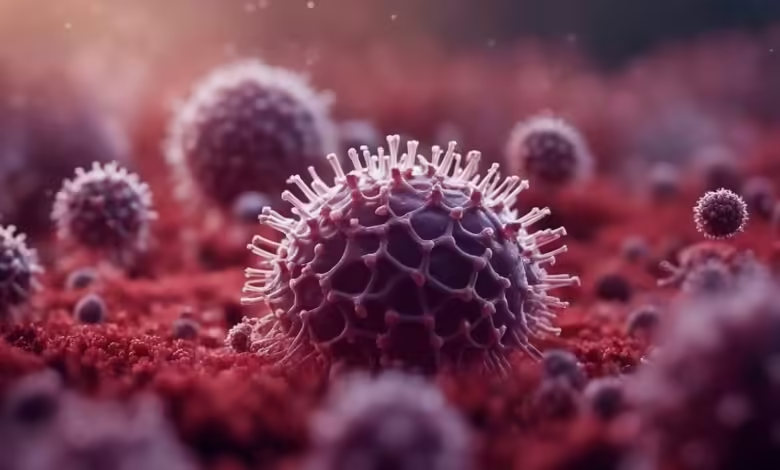
Nipah virus (NiV) is a zoonotic virus, meaning it can spread from animals to humans. It was first identified in 1999 during an outbreak in Malaysia and Singapore, which caused severe respiratory illness and encephalitis in humans. Since then, several outbreaks have occurred in South and Southeast Asia, including Bangladesh and India, highlighting the virus as a serious public health concern.
This article explores the origins, transmission, symptoms, diagnosis, treatment, and prevention of Nipah virus, providing a comprehensive overview of this deadly pathogen.
What is Nipah Virus?
Nipah virus is a member of the Paramyxoviridae family, closely related to the Hendra virus. It is classified as a Biosafety Level 4 (BSL-4) pathogen due to its high mortality rate and potential for human-to-human transmission. The virus is primarily transmitted from animals to humans, with fruit bats (Pteropus species) identified as the natural reservoir.
History and Origins
The first recorded outbreak of Nipah virus occurred in 1998-1999 in Malaysia and Singapore. The outbreak was linked to pig farms, where the virus spread from fruit bats to pigs and then to humans. More than 100 people died, and over a million pigs were culled to control the spread of the virus. The name “Nipah” comes from the village in Malaysia where the first cases were reported.
Since the initial outbreak, recurrent outbreaks have been reported, particularly in Bangladesh and India. These outbreaks have raised concerns about the virus’s potential to cause widespread epidemics, especially given its high fatality rate, which ranges from 40% to 75%.
Transmission
Nipah virus transmission occurs through several routes:
- Animal-to-Human Transmission:
- Fruit Bats: The primary reservoir, fruit bats, can transmit the virus through their saliva, urine, or feces. Humans can contract the virus by consuming contaminated fruits or fruit products, such as raw date palm sap, which bats may have contaminated.
- Pigs: During the 1999 outbreak, pigs were identified as intermediate hosts. The virus spread among pigs and then to humans through close contact with infected pigs or their bodily fluids.
- Human-to-Human Transmission:
- Human-to-human transmission is possible through close contact with the bodily fluids (such as saliva, urine, or blood) of an infected person. This type of transmission has been observed in healthcare settings and among family members caring for infected individuals.
- Environmental Contamination:
- The virus can also spread through contaminated environments, particularly where there is heavy bat or pig activity. For example, people can contract the virus by coming into contact with surfaces contaminated with the urine or saliva of infected animals.
Symptoms
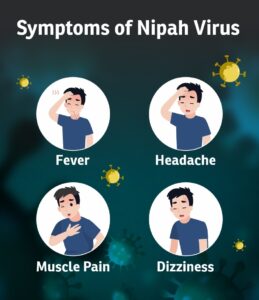
The incubation period for Nipah virus infection ranges from 4 to 14 days, although longer incubation periods have been reported. The symptoms of Nipah virus infection can vary from mild to severe and often progress rapidly.
- Initial Symptoms:
- Fever
- Headache
- Muscle pain
- Vomiting
- Sore throat
- Severe Symptoms:
- Dizziness
- Drowsiness
- Altered consciousness
- Acute respiratory distress
- Encephalitis (inflammation of the brain)
In severe cases, the infection can lead to coma and death. Encephalitis and respiratory complications are the primary causes of death in Nipah virus infections.
Diagnosis
Diagnosing Nipah virus infection can be challenging due to the similarity of its symptoms to other viral infections. However, early diagnosis is crucial for managing the spread of the virus and providing appropriate care.
- Laboratory Tests:
- Polymerase Chain Reaction (PCR): This test detects viral RNA in throat and nasal swabs, cerebrospinal fluid, urine, or blood.
- ELISA (Enzyme-Linked Immunosorbent Assay): This test detects antibodies against Nipah virus in the blood.
- Virus Isolation: In some cases, the virus may be isolated from clinical samples, although this is typically done in specialized laboratories.
- Imaging: In severe cases, imaging tests like MRI may be used to detect encephalitis.
Treatment
There is currently no specific antiviral treatment for Nipah virus infection. Management of the disease focuses on supportive care, which includes:
- Hospitalization: Patients with severe symptoms are usually hospitalized for intensive care, which may include mechanical ventilation for respiratory support.
- Hydration: Maintaining adequate hydration and electrolyte balance is essential.
- Symptomatic Treatment: Medications may be administered to reduce fever, pain, and other symptoms.
- Experimental Therapies: Research is ongoing to develop antiviral drugs and vaccines. Ribavirin, an antiviral drug, has shown some promise in experimental treatments, but its efficacy in humans is not well-established.
Prevention
Preventing Nipah virus infection requires a combination of public health measures, surveillance, and individual precautions.
- Avoiding Contact with Bats and Pigs:
- Limit exposure to fruit bats and pigs, especially in areas where Nipah virus outbreaks have been reported.
- Avoid consuming raw date palm sap or fruits that may have been contaminated by bats.
- Practicing Good Hygiene:
- Regular handwashing with soap and water can reduce the risk of transmission.
- Avoiding close contact with infected individuals and using personal protective equipment (PPE) in healthcare settings is crucial.
- Public Health Measures:
- Governments and health organizations must implement surveillance and monitoring programs to detect and respond to Nipah virus outbreaks promptly.
- Educating the public about the risks associated with Nipah virus and how to prevent its spread is essential.
- Research and Vaccine Development:
- Ongoing research aims to develop effective treatments and vaccines for Nipah virus. Collaborative efforts between governments, health organizations, and research institutions are critical to advancing these efforts.
Conclusion
Nipah virus remains a significant public health threat due to its high mortality rate and potential for human-to-human transmission. While there is currently no specific treatment or vaccine, understanding the transmission routes and taking preventive measures can help reduce the risk of infection. Continued research and public health vigilance are essential to managing and mitigating the impact of Nipah virus outbreaks.
By raising awareness and promoting preventive measures, we can better protect communities from the devastating effects of this deadly virus.