
Psoriasis: Causes, Symptoms, and Treatment
Psoriasis is a chronic autoimmune skin condition that accelerates the life cycle of skin cells

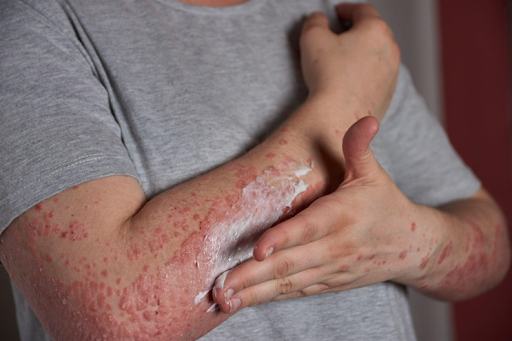
Psoriasis is a chronic autoimmune skin condition that accelerates the life cycle of skin cells, leading to the rapid buildup of cells on the skin’s surface. This buildup results in scaly, red patches that can be itchy, painful, and sometimes embarrassing for those affected. Psoriasis is not contagious, but it can have a significant impact on a person’s quality of life. This article will provide an overview of psoriasis, including its causes, symptoms, types, and treatment options.
What is Psoriasis?
Psoriasis is a long-lasting, inflammatory skin condition that causes skin cells to multiply up to ten times faster than normal. This rapid turnover of skin cells results in thick, scaly patches that can appear anywhere on the body, though they are most commonly found on the scalp, elbows, knees, and lower back. Psoriasis can vary in severity, with some people experiencing only mild symptoms, while others may have more widespread and severe patches that can affect daily life.
Causes of Psoriasis
The exact cause of psoriasis is not fully understood, but it is believed to be related to an overactive immune system. In people with psoriasis, the immune system mistakenly attacks healthy skin cells, causing an overproduction of new cells. These new cells move to the surface of the skin too quickly, forming the characteristic plaques of psoriasis.
Several factors can trigger or exacerbate psoriasis, including:
- Genetics: Psoriasis often runs in families, suggesting a genetic component. If one or both parents have psoriasis, there is an increased risk of developing the condition.
- Immune System Dysfunction: Psoriasis is an autoimmune disease, meaning that the immune system mistakenly attacks the body’s own tissues. In psoriasis, this attack speeds up the skin cell life cycle.
- Environmental Triggers: Certain factors can trigger or worsen psoriasis symptoms, such as infections (e.g., strep throat), skin injuries (e.g., cuts or burns), stress, smoking, heavy alcohol consumption, and certain medications (e.g., lithium, beta-blockers).
- Weather: Cold, dry weather can worsen psoriasis symptoms, while warm, sunny climates may help alleviate them.
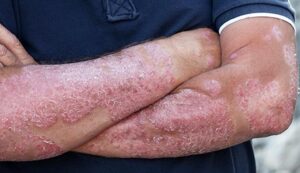
Symptoms of Psoriasis
The symptoms of psoriasis vary depending on the type and severity of the condition. Common signs and symptoms include:
- Red Patches of Skin: The most recognizable symptom of psoriasis is the appearance of red or pink patches of skin covered with silvery-white scales.
- Dry, Cracked Skin: Affected skin may become dry, cracked, and prone to bleeding.
- Itching and Burning: Psoriasis can cause intense itching, burning, or soreness in the affected areas.
- Thickened, Pitted Nails: Psoriasis can affect the nails, leading to thickening, pitting, and ridges.
- Joint Pain: Some people with psoriasis develop psoriatic arthritis, a condition that causes joint pain, swelling, and stiffness.
Types of Psoriasis
There are several different types of psoriasis, each with its own set of symptoms:
- Plaque Psoriasis: The most common form, characterized by raised, red patches covered with a silvery-white buildup of dead skin cells (plaques). These plaques can be itchy and painful.
- Guttate Psoriasis: This type often appears in childhood or young adulthood and is characterized by small, drop-shaped lesions on the trunk, arms, legs, and scalp. It is often triggered by a bacterial infection, such as strep throat.
- Inverse Psoriasis: Appears as smooth, red patches in skin folds, such as under the breasts, in the groin, or around the genitals and buttocks. This type of psoriasis is often aggravated by friction and sweating.
- Pustular Psoriasis: Characterized by white pustules (blisters of noninfectious pus) surrounded by red skin. It can be localized to certain areas of the body or widespread (generalized pustular psoriasis).
- Erythrodermic Psoriasis: A rare and severe form of psoriasis that can cover the entire body with a red, peeling rash that can itch or burn intensely. It can be life-threatening and requires immediate medical attention.
- Nail Psoriasis: Affects the nails, leading to pitting, abnormal nail growth, and discoloration. Severe cases can cause the nails to crumble or detach from the nail bed.
- Psoriatic Arthritis: This type combines skin symptoms with joint inflammation, leading to pain, stiffness, and swelling in the joints.
Diagnosing Psoriasis
Psoriasis is typically diagnosed based on a physical examination of the skin, nails, and scalp. In some cases, a dermatologist may perform a skin biopsy, where a small sample of skin is taken and examined under a microscope to confirm the diagnosis and rule out other skin conditions.
Treatment Options for Psoriasis
While there is no cure for psoriasis, there are various treatments available to manage symptoms and reduce flare-ups. The treatment plan depends on the type, severity, and location of psoriasis, as well as the patient’s overall health. Common treatment options include:
- Topical Treatments:
- Corticosteroids: Topical corticosteroids are the most commonly prescribed medications for mild to moderate psoriasis. They reduce inflammation and slow the growth of skin cells.
- Vitamin D Analogues: Synthetic forms of vitamin D, such as calcipotriene, can slow the growth of skin cells and reduce scaling.
- Retinoids: Topical retinoids, derived from vitamin A, help reduce inflammation and control the growth of skin cells.
- Coal Tar: A traditional treatment that helps reduce scaling, itching, and inflammation.
- Phototherapy (Light Therapy):
- UVB Phototherapy: Exposure to ultraviolet B (UVB) light can slow the growth of skin cells and reduce symptoms.
- PUVA: A combination of a drug called psoralen and ultraviolet A (UVA) light. This treatment is used for more severe cases of psoriasis.
- Systemic Medications:
- Methotrexate: An oral or injectable medication that suppresses the immune system and reduces inflammation.
- Cyclosporine: An immunosuppressant that can be effective for severe psoriasis but has potential side effects, including kidney damage.
- Biologics: Injectable medications that target specific parts of the immune system, such as tumor necrosis factor (TNF) inhibitors or interleukin inhibitors. These are often used for moderate to severe psoriasis.
- Oral Retinoids: Oral retinoids can be prescribed for severe psoriasis, particularly for pustular or erythrodermic psoriasis.
- Lifestyle Changes:
- Moisturizing: Keeping the skin moisturized can reduce dryness, itching, and scaling.
- Healthy Diet: A balanced diet and maintaining a healthy weight can help manage symptoms and reduce the risk of comorbidities.
- Stress Management: Stress can trigger psoriasis flare-ups, so managing stress through techniques such as yoga, meditation, or counseling can be beneficial.
Living with Psoriasis
Living with psoriasis can be challenging, both physically and emotionally. The visible nature of the condition can lead to self-consciousness and social isolation, and the discomfort can interfere with daily activities. However, with proper management and support, people with psoriasis can lead full, active lives.
Support groups and counseling can be helpful for those struggling with the emotional impact of psoriasis. Additionally, working closely with a dermatologist to find an effective treatment plan can make a significant difference in managing the condition.
Conclusion
Psoriasis is a chronic autoimmune condition that can significantly impact a person’s quality of life. While there is no cure, a range of treatments can help manage symptoms and reduce the frequency and severity of flare-ups. Early diagnosis and a personalized treatment plan are key to effectively managing psoriasis and improving overall well-being.